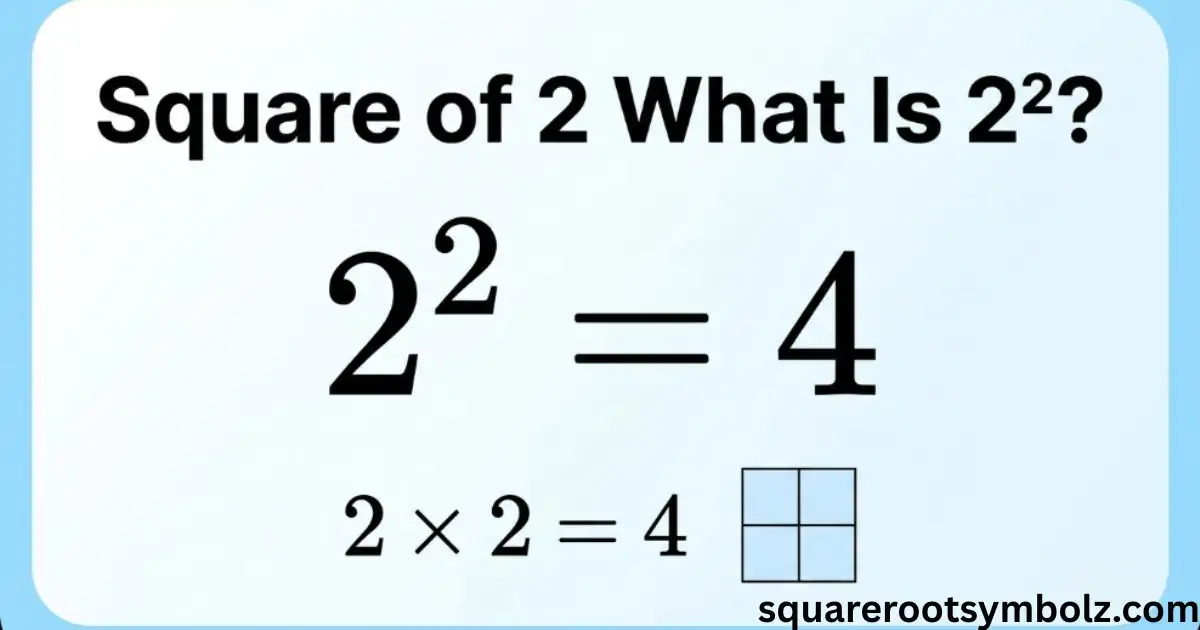
The square of 2 is 4 because 2 multiplied by itself gives 2 × 2 = 4. In exponential form, this is written as 2², where 2 is the base and the small 2 is the exponent. This simple calculation introduces an important idea used throughout arithmetic, algebra, geometry, and higher mathematics.
If the notation 2² has ever looked more complicated than it really is, the good news is that the idea is straightforward. In this guide, we will connect the square of 2 with multiplication, powers, square numbers, square roots, area, formulas, and common mistakes so the concept becomes easy to recognize and use.
What is the Square of 2
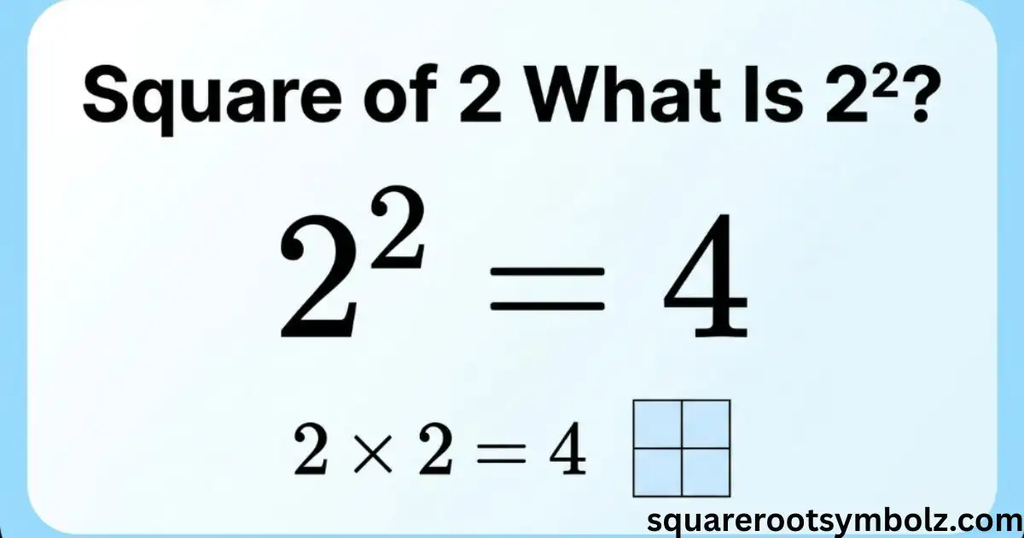
The square of a number means multiplying that number by itself. Therefore, the square of 2 is 2 × 2, which equals 4. The same result can be written as 2² = 4, where 2 is the base and the exponent tells us to use the base twice.
So the basic calculation is:
2 × 2 = 4
And in exponential notation:
2² = 4
The number 4 is called a perfect square because it can be written as the square of an integer:
4 = 2²
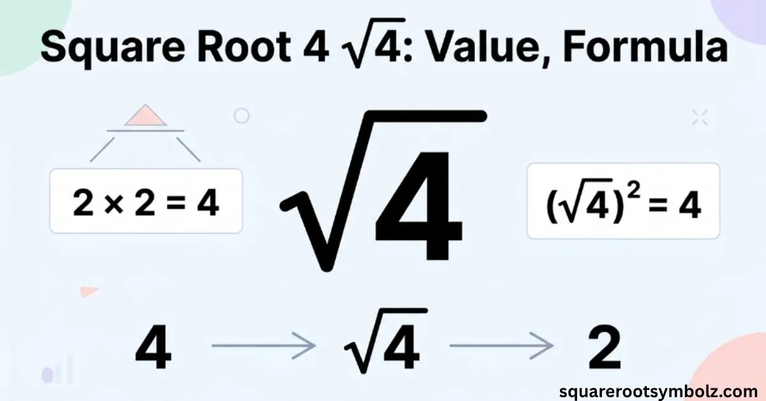
This relationship also connects directly with square roots:
√4 = 2
So you can think of squaring and taking a principal square root as opposite operations in this simple example.
| Form | Meaning | Result |
| 2 × 2 | Multiply 2 by itself | 4 |
| 2² | 2 squared | 4 |
| √4 | Principal square root of 4 | 2 |
| 4 ÷ 2 | Divide 4 by 2 | 2 |
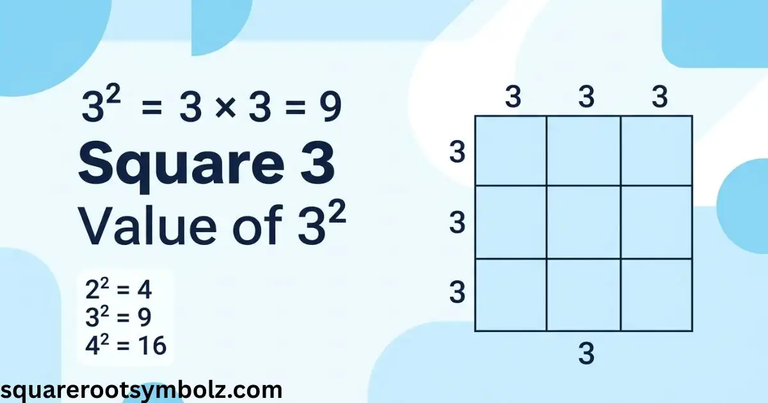
There is also a geometric reason the word square is used. A square with a side length of 2 units has an area of:
Area = side × side
Area = 2 × 2 = 4 square units
That is why squaring a number has a natural connection to the area of a square.
How to Calculate the Value of Square of 2
There are several simple ways to calculate the square of 2. The quickest is multiplication: take the number and multiply it by itself. You can also use exponential notation or enter the number into a calculator. All three approaches give exactly 4.
By the Multiplication Method
Start with the number 2 and multiply it by itself:
2 × 2 = 4
The result, 4, is the square of 2.
This is the most direct method because the definition of squaring is repeated multiplication of the same number. For a single-digit number such as 2, there is no need for a complicated procedure or special shortcut.
Using a Formula (a²)
The general formula for the square of a number is:
a² = a × a
If a = 2, substitute 2 into the formula:
2² = 2 × 2
Therefore:
2² = 4
The exponent 2 does not mean 2 × 2 as two separate numbers in the expression itself. It tells you to use the base, 2, as a factor twice. This notation becomes extremely useful when working with algebraic expressions and powers.
By Using a Calculator
A calculator can verify the result almost instantly. Enter 2, use the square or exponent function, and the display should give 4. You can also simply calculate 2 × 2.
For a basic problem such as this, mental calculation is usually faster. A calculator becomes more useful when the number is larger, contains decimals or fractions, or appears inside a longer mathematical expression.
The important point is that the calculator is checking a mathematical relationship you already understand:
2² = 2 × 2 = 4
That understanding is more valuable than memorizing the answer alone.
Common Mistakes to Avoid When Calculating the Square of 2
The square of 2 is simple, but small notation mistakes can create confusion. Students sometimes confuse 2² with 2 × 2², confuse squaring with taking a square root, or forget that the exponent tells how many times the base is used as a factor. Understanding the notation prevents these errors.
Mistake 1
A common error is thinking that 2² means 2 + 2. It does not. The exponent 2 means multiplication:
2² = 2 × 2 = 4
Addition would give 2 + 2 = 4 in this particular case, which can hide the misunderstanding. Try 3²: 3 + 3 = 6, but 3² = 9. That makes the difference clear.
Mistake 2
Another mistake is confusing a square with a square root. Squaring 2 gives:
2² = 4
Taking the principal square root of 4 gives:
√4 = 2
These operations move in opposite directions. When you see the exponent 2, think “multiply the number by itself.” When you see √, think “what number produces this value when multiplied by itself?”
Mistake 3
Do not confuse 2² with 2 × 2². The first expression equals 4:
2² = 4
The second requires the exponent to be evaluated first:
2 × 2² = 2 × 4 = 8
Parentheses can also change an expression. For example, (2 + 1)² means 3², which equals 9, not 2 + 1². Careful notation matters as expressions become more advanced.
Mistake 4
Another common issue is misunderstanding negative numbers. The square of −2 is positive:
(−2)² = (−2) × (−2) = 4
A negative multiplied by a negative gives a positive. This is why both 2 and −2 produce 4 when squared:
2² = 4
(−2)² = 4
However, −2² without parentheses is conventionally interpreted as −(2²), which equals −4. Parentheses therefore matter when a negative number is being squared.
Solved Examples on Square of 2
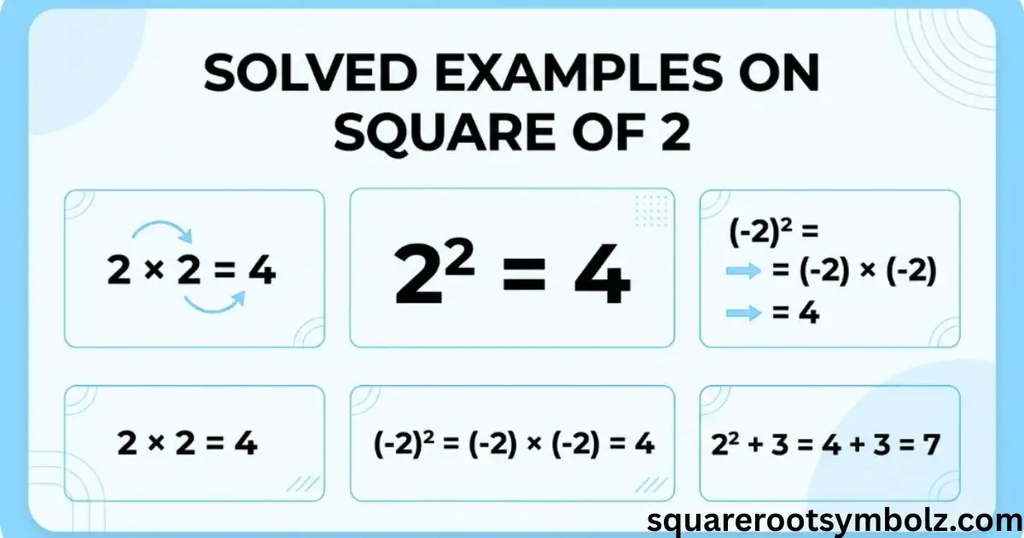
The square of 2 appears in much more than a direct multiplication question. It can be used to find the area of a square, calculate the area of a circle when the radius is 2, determine a perimeter, and connect arithmetic with geometry.
Problem 1
Find the area of a square with a side length of 2 cm.
Use:
Area = side²
Substitute 2:
Area = 2²
Area = 4 cm²
Therefore, the area is 4 square centimeters.
This is the geometric meaning of squaring: multiplying the side length by itself gives the area of the square.
Problem 2
A square table has a side length of 2 feet. What is its area?
Use:
Area = side²
So:
Area = 2²
Area = 4 square feet
If covering the table costs $3 per square foot, the total cost would be:
4 × $3 = $12
The square of 2 therefore becomes part of a practical measurement and cost calculation.
Problem 3
Find the area of a circle with radius 2 meters.
The formula is:
Area = πr²
Substitute r = 2:
Area = π × 2²
Area = 4π
Using π ≈ 3.14:
Area ≈ 12.56 m²
So the approximate area is 12.56 square meters.
Problem 4
Find the perimeter of a square whose side length is 2 cm.
The perimeter formula is:
P = 4s
Substitute s = 2:
P = 4 × 2
P = 8 cm
Notice that this problem uses the number 2 directly rather than its square. Comparing the formulas helps show why it is important not to square a number unless the formula specifically calls for an exponent of 2.
Problem 5
What is the square of 3?
Although the focus here is the square of 2, comparing neighboring values makes the pattern easier to remember:
2² = 4
3² = 9
4² = 16
Each square comes from multiplying the number by itself. This sequence is the beginning of the familiar perfect-square pattern:
1, 4, 9, 16, 25, 36, …
That pattern becomes useful later when learning square roots, factoring, algebra, and geometry.
Conclusion
The square of 2 is 4, and the calculation is simply 2² = 2 × 2 = 4. The small 2 is the exponent, while the first 2 is the base. This same idea connects arithmetic with perfect squares, square roots, algebra, and geometry.
The easiest way to remember the square of 2 is to picture a 2-by-2 square. Its area is 4 square units. Once this basic relationship is clear, expressions involving powers become much easier to read, calculate, and check.
FAQ Section
What is the square of 2?
The square of 2 is 4 because 2 × 2 = 4. In exponential form, this is written as 2² = 4.
What is 2 squared?
2 squared is 4. The expression is 2², which means 2 multiplied by itself: 2 × 2 = 4.
Why is 2² equal to 4?
The exponent 2 tells you to use the base as a factor twice:
2² = 2 × 2 = 4
What is the square root of 4?
The principal square root of 4 is 2:
√4 = 2
The equation x² = 4, however, has two solutions: x = 2 and x = −2.
Is 4 a perfect square?
Yes. 4 is a perfect square because it is the square of the integer 2:
4 = 2²
What is the difference between 2² and √2?
2² = 4, while √2 ≈ 1.414. Squaring and taking a square root are different operations.
What is the square of −2?
The square of −2 is 4:
(−2)² = (−2)(−2) = 4
What is 2³?
2³ means multiplying 2 by itself three times:
2³ = 2 × 2 × 2 = 8
So 2² = 4, while 2³ = 8.
Is the square of 2 even or odd?
The square of 2 is 4, which is even. More generally, the square of an even integer is always even. BrightCHAMPS also identifies this as a useful square-number pattern.
What is the area of a square with side 2?
The area is 4 square units because:
Area = side² = 2² = 4

I’m the creator of SquareRootSymbolz.com, where I publish easy-to-understand guides on symbols, Unicode characters, Alt codes, keyboard shortcuts, and copy-and-paste text symbols. My goal is to provide accurate, well-researched, and user-friendly content that helps readers quickly find the information they need.