

The inner diameter symbol identifies the diameter measured across the inside of a circular opening, such as a pipe, tube, hole, or bore. In engineering, the abbreviation ID or I.D. is commonly used for inner diameter, while OD identifies outer diameter. Standards-based symbol systems can also use dedicated graphical symbols for these concepts.
If you have ever looked at a mechanical drawing and wondered whether a number referred to the inside or outside of a pipe, you are not alone. A small notation can completely change the meaning of a dimension. This guide explains ID, ⌀, Ø, OD, engineering drawings, pipe measurements, and standardized symbol references so you can read and use them correctly.
Inner Diameter Symbol
The most common written notation for inner diameter is ID, meaning inner diameter or inside diameter. In technical drawings, product specifications, pipe schedules, and mechanical documentation, ID identifies the distance across the internal opening of a cylindrical feature.
There is an important distinction between the abbreviation ID and the general diameter sign ⌀. The diameter sign indicates a diameter dimension, while ID tells the reader that the measurement specifically concerns the inside of the object. Standards-based systems can also provide dedicated symbols for identifying inner diameter.
Common Notations
You may encounter ID, I.D., inside diameter, or inner diameter depending on the industry and document style. For example, a pipe specification might state ID 20 mm, meaning the internal diameter is 20 mm. In engineering drawings, the surrounding dimensions and notation determine exactly what the measurement describes.
The same concept appears in mechanical parts, bearings, tubing, hoses, washers, bushings, cylinders, and drilled holes. In manufacturing, knowing the ID matters because it determines the available internal space, fit with mating components, and in fluid systems, the size of the passage through which material can move.

Example
Suppose a hollow metal tube is specified as ID 18 mm and OD 25 mm. The 18 mm measurement describes the empty internal opening, while 25 mm describes the full outside diameter. The difference between them represents the material thickness around the tube. This simple distinction prevents many sizing mistakes.
For a uniform circular tube, wall thickness can be calculated from:
Wall thickness = (OD − ID) ÷ 2
So for an OD of 25 mm and ID of 18 mm:
(25 − 18) ÷ 2 = 3.5 mm
That means the tube wall is 3.5 mm thick.
Radius Symbol and Diameter Comparison
The inner diameter is directly related to radius, but they are not the same measurement. The diameter crosses the complete circular opening through its center, whereas the radius extends from the center to the edge. Therefore, diameter is twice the radius.
For an internal opening with an ID of 20 mm, the corresponding internal radius is 10 mm. This relationship becomes particularly useful when moving between engineering dimensions and mathematical calculations involving area, circumference, flow, or circular geometry.
| Measurement | Meaning | Example |
| ID | Inner diameter | 20 mm |
| OD | Outer diameter | 30 mm |
| Radius | Half of diameter | 10 mm |
| Wall thickness | Material between ID and OD | 5 mm |
A common mistake is to read an internal measurement as though it were the outside dimension. When selecting tubing, bearings, seals, or fittings, that error can produce a component that physically cannot fit.
Diameter in Mathematics
In mathematics, diameter describes the full width of a circle through its center. The conventional relationship is d = 2r, where d represents diameter and r represents radius. The same geometric relationship applies when measuring the circular opening inside a cylindrical object.
For a circle with an internal diameter of 12 cm, the radius is 6 cm. The circumference can then be calculated using C = πd, giving approximately 37.70 cm. These relationships connect the practical engineering meaning of ID with the mathematical geometry behind circular measurements.
C=2πr
C=2πr=2π(3.00)=18.85C=2\pi r=2\pi(\text{3.00})=\text{18.85}C=2πr=2π(3.00)=18.85
rrr
rrr
circumferencer = 3.00
Give feedback
This is especially useful when an engineering specification gives an internal diameter but a calculation requires radius or circumference. Converting between these values keeps the mathematical model consistent with the physical dimension.
Common Mistakes to Avoid
One of the biggest mistakes is assuming that ID and ⌀ mean exactly the same thing. The symbol ⌀ communicates diameter, while ID communicates that the diameter is measured internally. Likewise, OD specifically identifies the outside diameter. Context determines which notation is appropriate.
Another common mistake is confusing Ø with ⌀. They can look nearly identical in many fonts, but they are different Unicode characters. Ø is the Latin capital letter O with stroke, while ⌀ is the Unicode Diameter Sign. For casual specifications they may appear interchangeably, but technical data should follow the notation required by the relevant system or standard.
What does ID mean in engineering?
In engineering, ID means inner diameter or inside diameter. It describes the distance across the internal circular opening of a component. Engineering references commonly use ID alongside OD, which means outer diameter. Government engineering-drawing material explicitly lists ID as inner diameter and OD as outer diameter.
For example, a drawing might specify a cylindrical part as ID 15 mm × OD 22 mm. The first value tells the manufacturer the required internal opening, while the second establishes the outside boundary. Together, the measurements define the basic geometry and can also be used to calculate wall thickness.
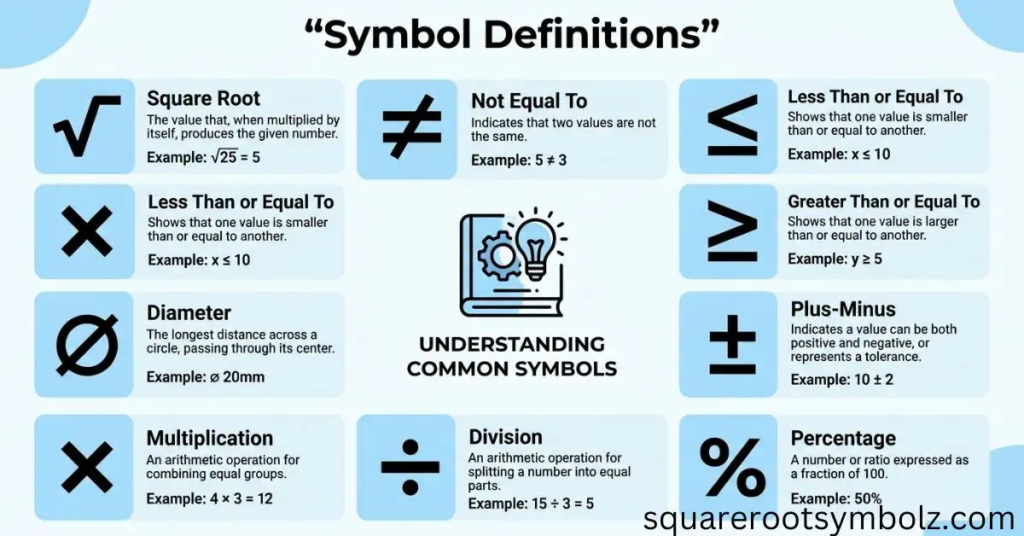
Symbol Definitions
Standards-based symbol systems make the distinction between inner and outer diameter especially important. Boston Scientific’s symbols glossary identifies Inner diameter as reference 5845 and Outer diameter as reference 5846 under IEC TR 60878.
FDA-hosted medical-device documentation also lists separate inner diameter symbol and outer diameter symbol definitions, while a recent FDA filing identifies these symbols under IEC 60417. This demonstrates that inner-diameter notation is more than an informal abbreviation used by machinists; it can also be part of formal technical and regulatory symbol systems.
ID vs OD at a glance
| Term | Meaning | Where measured |
| ID | Inner diameter | Across the inside |
| OD | Outer diameter | Across the outside |
| ⌀ | Diameter sign | Indicates a diameter dimension |
| R | Radius | Center to circumference |
| Wall thickness | Material thickness | Between ID and OD |
The easiest way to remember the difference is simple:
ID = Inside
OD = Outside
That small memory trick is surprisingly useful when reading pipe specifications, mechanical drawings, product catalogs, and manufacturing documentation.
Inner Diameter Symbol in Pipes and Tubes
For pipes and tubes, ID is particularly important because the internal opening controls the available passage. A pipe can have a relatively large OD while maintaining a much smaller ID because of its wall thickness. Engineering and industrial specifications therefore commonly distinguish these two measurements.
For example, if a tube has an OD of 32 mm and an ID of 26 mm, its wall thickness is:
(32 − 26) ÷ 2 = 3 mm
That 3 mm figure describes the radial thickness of the tube wall, not its diameter.
Inner Diameter Symbol in Engineering Drawings
On engineering drawings, diameter information is used to communicate the size of cylindrical features, holes, bores, and other circular geometry. A diameter sign may precede a dimension, while ID or another contextual designation clarifies whether the dimension describes an internal feature.
This matters particularly in manufacturing because a hole dimension and an outside diameter dimension can refer to completely different surfaces. A machinist, inspector, or designer must be able to identify the intended feature without ambiguity.
Inner Diameter vs Diameter Symbol
The simplest distinction is:
Diameter symbol: ⌀
Inner diameter abbreviation: ID
The first communicates what kind of measurement is being specified. The second communicates which side of a cylindrical object is being measured. In a technical context, they can appear together conceptually, but they do not carry exactly the same information.
Quick Inner Diameter Reference
| Item | Answer |
| Inner diameter abbreviation | ID |
| Alternative abbreviation | I.D. |
| Outer diameter abbreviation | OD |
| Diameter sign | ⌀ |
| Common diameter substitute | Ø |
| Inner diameter meaning | Inside width of a circular opening |
| Outer diameter meaning | Outside width of a circular object |
| ID formula from OD and wall thickness | ID = OD − 2t |
| Wall thickness formula | t = (OD − ID) ÷ 2 |
| Engineering use | Pipes, tubes, holes, bores, bearings, drawings |
| IEC TR 60878 reference | Inner diameter 5845 |
| IEC TR 60878 outer diameter reference | 5846 |
FAQ Section
What is the inner diameter symbol?
ID is the most common abbreviation for inner diameter or inside diameter. Standards-based technical symbol systems can also define a dedicated graphical inner-diameter symbol.
What does ID stand for?
ID stands for inner diameter or inside diameter. It describes the diameter measured across the internal opening of a circular or cylindrical object.
What is the symbol for inner diameter?
In everyday engineering documentation, ID or I.D. is widely used. A dedicated standardized symbol may be used in specific industries and labeling systems, so the applicable standard should be checked.
Is ID the same as diameter?
Not exactly. Diameter describes the full width across a circle, while ID specifically identifies a diameter measured on the inside of a hollow component.
What is the difference between ID and OD?
ID means inner diameter, measured across the internal opening. OD means outer diameter, measured across the outside of the component.
Is ⌀ the inner diameter symbol?
⌀ is the diameter sign, not inherently an inner-diameter sign. Whether it refers to an internal or external feature depends on the drawing, callout, or surrounding notation.
What does Ø mean?
Ø is the Latin capital letter O with stroke. It is frequently used visually as a diameter notation, although it is technically different from the Unicode Diameter Sign ⌀.
How do you calculate inner diameter?
If you know the outer diameter and wall thickness, use:
ID = OD − 2 × wall thickness
For example, OD 30 mm with a 4 mm wall gives an ID of 22 mm.
What is the difference between inner diameter and radius?
Inner diameter measures across the complete internal opening. Inner radius measures from the center to the internal edge. Therefore, ID = 2 × inner radius.
Where is inner diameter used?
Inner diameter is commonly used for pipes, tubing, hoses, holes, bearings, bushings, cylinders, mechanical components, and engineering drawings.
What is the IEC inner diameter symbol?
IEC-related symbol systems identify inner diameter separately from outer diameter. Boston Scientific’s glossary lists Inner diameter as reference 5845 under IEC TR 60878.

I’m the creator of SquareRootSymbolz.com, where I publish easy-to-understand guides on symbols, Unicode characters, Alt codes, keyboard shortcuts, and copy-and-paste text symbols. My goal is to provide accurate, well-researched, and user-friendly content that helps readers quickly find the information they need.