A number square is a grid of numbers, usually arranged from 1 to 100, that helps learners see counting, place value, arithmetic, multiples, and number patterns at a glance. In the United States, you may also hear it called a 100 chart, hundred chart, or number grid.
If you have ever watched a child count through a problem one number at a time, you have seen why this simple tool matters. A well-designed number square turns an abstract calculation into something visible. It can help with addition, subtraction, multiplication, fractions, decimals, percentages, and prime-number patterns.
What is a number square?
A number square is a rectangular grid containing numbers in a predictable sequence. The most common version is a 10 × 10 grid containing 1 through 100, although smaller versions such as 1–20 are also used. In U.S. classrooms, the closely related term 100 chart is common.
The arrangement is what makes the grid useful. In a standard 1–100 chart, moving one cell to the right increases the number by 1, while moving one row downward increases it by 10. That spatial pattern lets students visualize counting, place value, addition, subtraction, and multiples instead of relying only on memory.
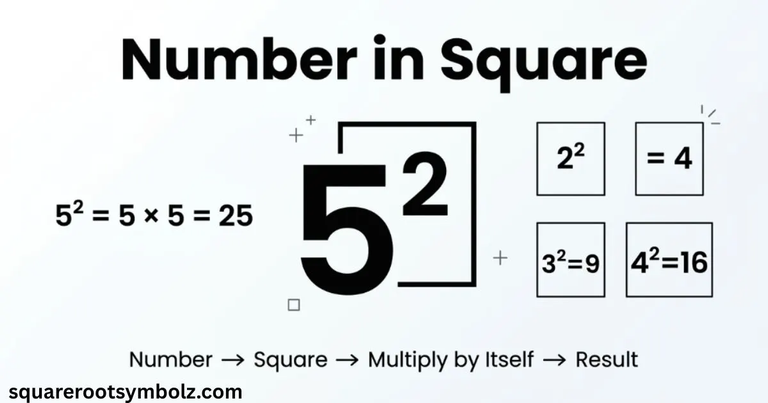
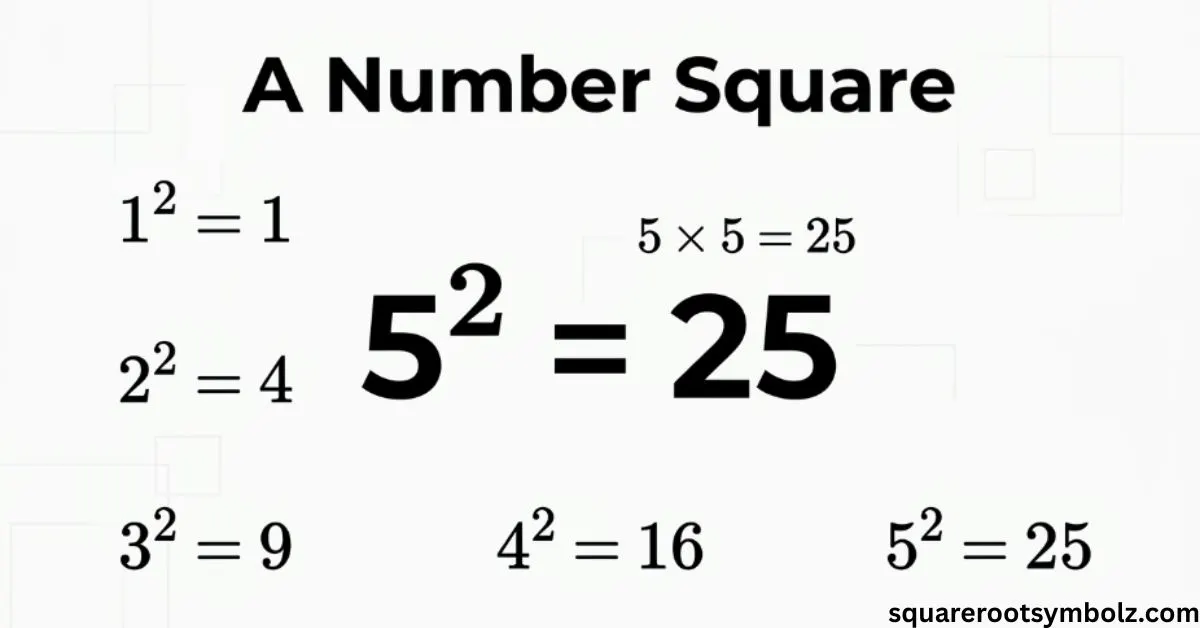
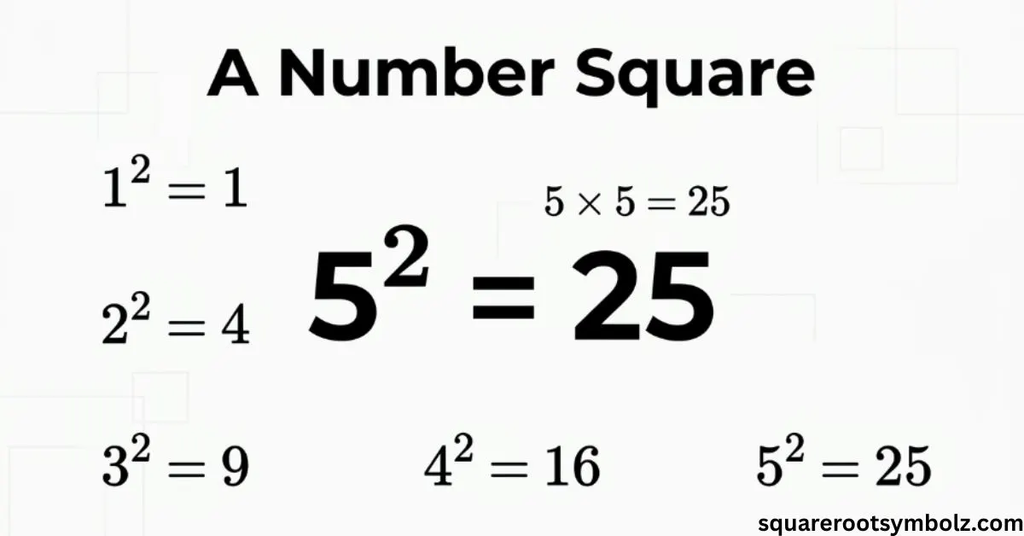
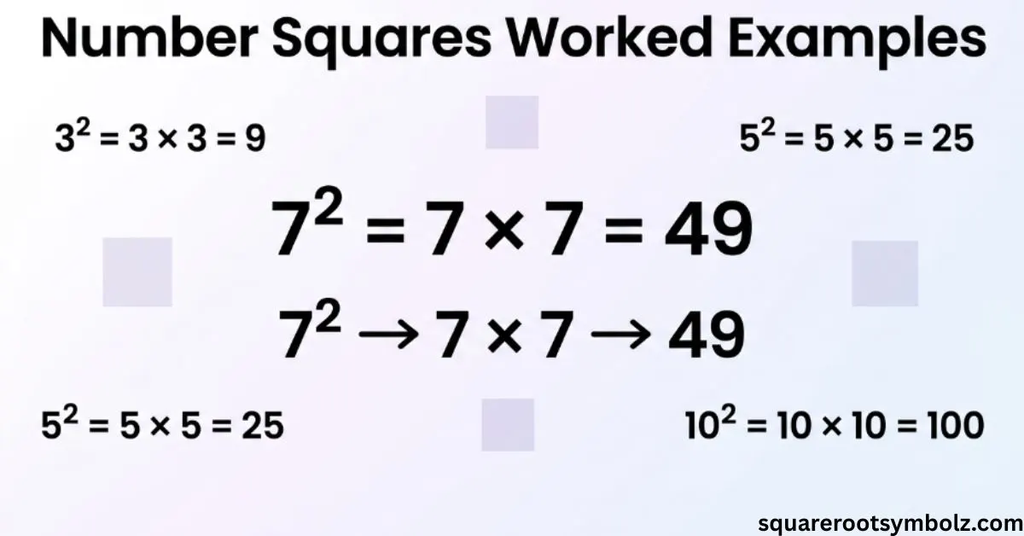
A number square should not be confused with a square number. A number square is a visual grid used to organize numbers. A square number is the result of multiplying an integer by itself, such as 9 because 3 × 3 = 9.
Why are number squares useful?
The main advantage of a number square is that it makes number relationships visible. Students can count forward or backward, compare neighboring values, recognize multiples, and see how tens and ones change. This visual support can make arithmetic feel less like memorizing isolated facts and more like navigating a map.
Teachers can also reuse the same grid for different mathematical ideas. One day it might support addition; another day it might reveal multiples of 5 or 10. A blank 10 × 10 grid can later represent fractions, decimals, and percentages, giving students a consistent visual model across several topics.
For example, finding 47 on a 100 chart immediately shows its neighbors: 46 and 48 horizontally, 37 above it, and 57 below it. Those relationships reinforce the meaning of one more, one less, ten more, and ten less without requiring a separate diagram.
How to use number squares in the classroom
A number square becomes most powerful when students use it actively rather than simply looking at it. Ask learners to predict where a number should appear, explain why it belongs there, or describe the pattern created when certain values are highlighted.
For example, highlight every multiple of 5. The resulting pattern makes the 5 and 0 endings easy to notice. Highlight multiples of 2 and students can see the alternating pattern of even numbers. Similar activities can connect multiplication tables with spatial patterns and number sequences.
1. Number squares for place value
A number square can reinforce place value by showing how numbers are related across rows and columns. In a standard 100 chart, moving vertically changes the tens value by one while keeping the ones relationship visible. Missing-number activities encourage students to explain their reasoning rather than simply guess.
For example, if 46 is visible and the cell directly below is blank, students can reason that the missing value must be 56 because moving down one row adds ten. That small observation connects the grid’s layout directly to the structure of two-digit numbers.
2. Number squares for addition and subtraction
Number squares provide a practical way to model addition and subtraction. To add 7 to 32, a learner can move seven spaces to the right. To subtract 20 from 68, moving two rows upward reaches 48. The visual movement reinforces what the arithmetic operation is doing.
As students become more confident, they can combine larger jumps. Instead of counting every individual square, they may move by tens first and then ones. This supports more efficient mental calculation and helps learners understand why partitioning a number into tens and ones works.
3. Number squares for times tables
Highlighting multiples transforms a number square into a visual multiplication resource. Students can mark every second number for the 2 times table, every fifth number for the 5 times table, or every tenth number for the 10 times table. The resulting patterns make multiplication relationships easier to see.
For example, the multiples of 3 are 3, 6, 9, 12, 15, 18, and so on. Marking those cells creates a recognizable pattern across the grid. Students can then predict where later multiples will appear and use the pattern to check their multiplication facts.
4. Number squares for fractions
A blank 10 × 10 square contains 100 equal spaces, making it useful for visualizing hundredths. Shading 25 of the 100 cells represents 25/100, which is equivalent to 1/4. Similarly, shading 50 cells represents 50/100 or 1/2.
This visual model can help bridge the gap between fractions and area. Instead of seeing 25/100 as two numbers separated by a fraction bar, students can see 25 selected parts out of 100 equal parts. That connection can make equivalent fractions easier to understand.
5. Number squares for decimals
A number square can also show decimal values by connecting tenths and hundredths to parts of a whole. For instance, 3 shaded columns out of 10 represent 3/10, which is 0.3. A more detailed grid can show 47/100 as 0.47.
This representation is particularly useful because students can see why the digits after the decimal point have different place values. Four tenths plus seven hundredths gives 0.47, linking the visual model to the written decimal notation.
6. Number squares for percentages
Because a 10 × 10 grid contains 100 cells, it provides a natural model for percentages. If 30 of the 100 cells are shaded, the shaded portion represents 30%. The same region can also represent 30/100 and 0.30, connecting percentage, fraction, and decimal notation.
This is one reason a blank hundred chart can be useful beyond basic counting. Students can shade 10 cells for 10%, 25 cells for 25%, or 75 cells for 75%. The visual relationship helps turn percentage into something concrete rather than purely symbolic.
7. Number squares and prime numbers
A number square can help students investigate prime numbers by identifying multiples and seeing which numbers remain. For example, teachers can shade multiples of 2, then 3, then other relevant factors. Numbers that remain unshaded can reveal patterns associated with primes.
This activity encourages students to look for structure rather than memorize a list. It also connects multiplication, factors, divisibility, and prime numbers within one familiar grid, giving the learner a reason to ask why certain numbers behave differently from their neighbors.
When do children use number squares in school?
Number squares can appear throughout elementary mathematics because the same visual model supports different skills at different stages. Younger students may use a 1–20 chart for counting, while older students can use a 1–100 chart for multiplication, place value, fractions, decimals, percentages, and prime numbers.
The exact timing varies by curriculum, teacher, and learner. Third Space Learning describes uses ranging from early years through later primary grades, while Learning Street discusses use across Key Stage 1 and Key Stage 2. The U.S. equivalent is often an elementary 100 chart rather than the British classroom terminology.
Number squares worked examples
Example 1: Find a missing number
Suppose a 100 chart shows 14 in the center, with one cell immediately above it left blank. Since moving up one row subtracts 10, the missing number is 4. The same reasoning works for numbers below, above, left, and right.
Example 2: Solve 78 − 43
Start at 78. Subtract 40 by moving four rows upward, reaching 38. Then subtract 3 by moving three spaces left. You arrive at 35. This illustrates how tens and ones can be separated during subtraction.
Example 3: Represent 79%
On a 100-cell grid, shade 79 cells. The shaded portion represents 79/100 = 0.79 = 79%. A number square therefore provides one visual model for three equivalent ways of expressing the same quantity.
Example 4: Add 10
If you start at 54 and move one row down, you reach 64. The change is +10. This demonstrates why a standard 100 chart can support place-value reasoning as well as straightforward arithmetic.
Number squares practice questions
Try these without looking at the answers first:
| Question | Answer |
| What number comes immediately after 39? | 40 |
| What number is 10 greater than 52? | 62 |
| What number is 10 less than 87? | 77 |
| What is the third multiple of 4? | 12 |
| What percentage is 25 shaded cells out of 100? | 25% |
| What decimal represents 67 shaded cells out of 100? | 0.67 |
| What fraction represents 11 shaded cells out of 100? | 11/100 |
These exercises reflect the types of missing-number, arithmetic, multiples, fraction, decimal, and percentage activities described by current educational resources.
A useful challenge is to remove several numbers from a chart and ask the learner to rebuild them using clues. For instance, if one blank is directly below 42, the answer must be 52. This turns the grid into a reasoning exercise rather than a simple counting sheet.
When are children taught to use number squares?
Number squares are introduced when children can benefit from seeing numerical relationships in a structured visual format. Learning Street describes 1–100 grids being used for early multiplication patterns and later applications involving addition, subtraction, decimals, fractions, and percentages.
The important point is not a particular grade level but the mathematical purpose. A young learner might use a small grid to count by twos, while an older student may use a hundred chart to explore factors or percentage equivalence. The same tool grows with the learner.
Number squares can be used for percentages and decimal numbers
A 10 × 10 grid is especially convenient for percentages because it contains 100 equal spaces. Shading 50 spaces gives 50%, while shading 25 spaces gives 25%. The same shaded regions can be described as fractions and decimals, creating a direct visual bridge among the three forms.
For example, 25 shaded cells represent 25/100, 0.25, and 25%. Students can see that these aren’t unrelated answers; they are different ways to describe the same portion of one whole. That connection becomes especially helpful when decimal place value is still developing.
How does Learning Street help children with number squares?
Learning Street emphasizes building mathematical understanding gradually rather than treating a worksheet as a one-time exercise. Its explanation presents number squares as a reusable learning tool for counting, times tables, arithmetic, fractions, decimals, and percentages.
The broader lesson is useful for parents and teachers: a number square works best when children are asked to notice, predict, explain, and test patterns. Simply handing over a completed chart has limited value. Asking “How do you know?” turns the same grid into a reasoning tool.
A number square vs. a square number
These terms sound almost identical, but they describe different mathematical ideas. A number square is a grid containing numbers, often 1–100. A square number is a number produced by multiplying an integer by itself, such as 16 = 4².
Conclusion
A number square is a simple but powerful visual tool for organizing numbers and revealing mathematical patterns. The most familiar version is a 1–100 grid, often called a 100 chart in U.S. classrooms. It can support counting, place value, addition, subtraction, multiplication, fractions, decimals, percentages, and prime-number exploration.
The biggest advantage is not the grid itself it is what students can see and reason about. Moving right shows +1, moving down shows +10, and highlighting multiples exposes patterns. Just remember that a number square is not the same thing as a square number, which means a number multiplied by itself.
FAQ Section
What is a number square?
A number square is a grid containing numbers in a sequence, commonly 1 through 100, used to support counting, arithmetic, place value, and number patterns.
What is a number square called in the USA?
In U.S. classrooms, 100 chart, hundred chart, or number grid are common terms for a 1–100 number square.
What is the difference between a number square and a square number?
A number square is a grid of numbers. A square number is the result of multiplying an integer by itself, such as 25 = 5 × 5.
What is a 100 chart?
A 100 chart is a grid containing the numbers 1 through 100, usually arranged in ten rows and ten columns. It is essentially the most common type of number square.
How does a number square help with addition?
On a standard 1–100 grid, moving one space right adds 1. Larger jumps can be used to model addition, while moving down one row adds 10.
How does a number square help with subtraction?
Students can move left to subtract ones and upward to subtract tens. For example, moving two rows upward from 68 gives 48, representing 68 − 20.
Can a number square teach multiplication?
Yes. Highlighting multiples of 2, 3, 5, 10, or another number lets students see multiplication patterns across the grid.
Can a number square show fractions?
Yes. A blank 10 × 10 grid contains 100 equal cells, so shading 25 cells can represent 25/100, or 1/4.
Can a number square show decimals?
Yes. A hundred chart can visually represent hundredths. For example, 47 shaded cells out of 100 represent 0.47.
Can a number square show percentages?
Yes. Because the grid has 100 cells, the number of shaded cells directly corresponds to a percentage. For example, 30 shaded cells represent 30%.
Is 9 a square number?
Yes. 9 is a square number because 3 × 3 = 9, or 3² = 9.
What is the most common number square?
The most common format is a 10 × 10 grid containing 1–100, although smaller 1–20 grids and other ranges are also used.

I’m the creator of SquareRootSymbolz.com, where I publish easy-to-understand guides on symbols, Unicode characters, Alt codes, keyboard shortcuts, and copy-and-paste text symbols. My goal is to provide accurate, well-researched, and user-friendly content that helps readers quickly find the information they need.