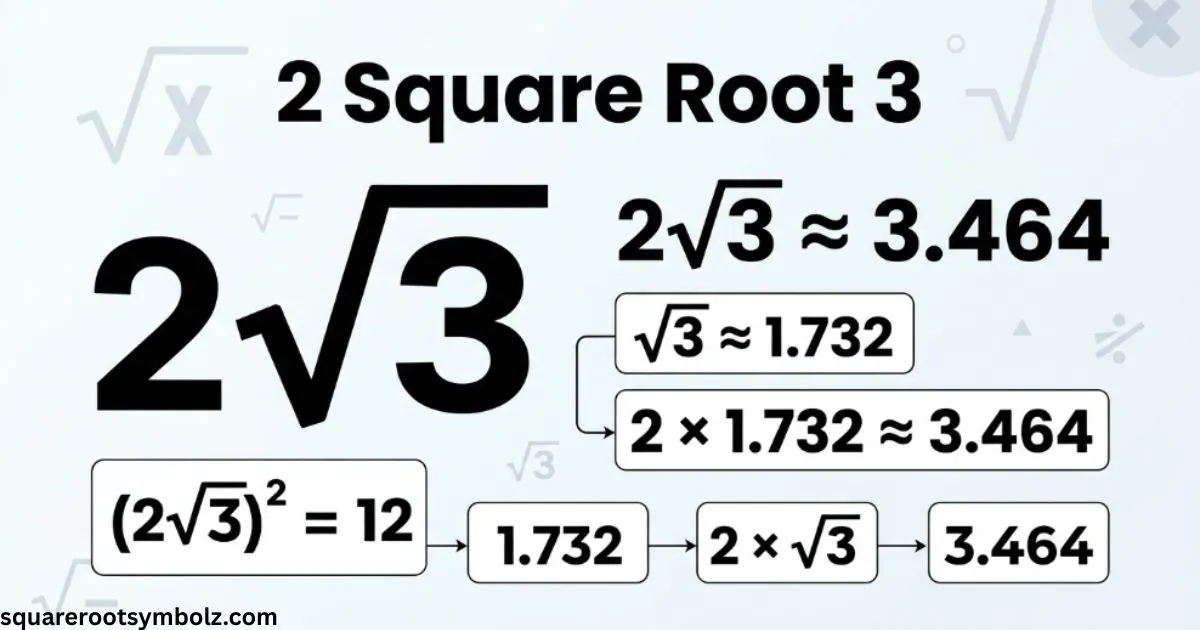
2 square root 3 means 2 × √3, written as 2√3. Its exact value is 2√3, and its decimal value is approximately 3.464101615. Because √3 is irrational, multiplying it by the nonzero integer 2 keeps the result irrational. Mathway currently gives 2√3 as the exact form and 3.46410161… as its decimal form.
If this expression looks confusing at first, the key is to separate the coefficient from the radical. The 2 is outside the square root, while 3 is the radicand. In this guide, we will connect 2√3 with √12, simplified radicals, exact values, decimal approximations, fractions, surds, and practical examples.
Simplifying Square Roots
Simplifying a square root means reducing the radical to its simplest exact form by taking perfect-square factors outside the radical. The same idea explains why √12 becomes 2√3. Since 12 contains the perfect-square factor 4, we can separate √12 into √4 × √3.
The basic radical rule is √(ab) = √a × √b when the relevant quantities are nonnegative. For 12, choose 4 × 3. Then √12 = √4 × √3 = 2√3. The result is simpler because no perfect-square factor remains inside the radical.
Example: √12 is simpler as 2√3
The expression 2√3 is the simplified radical form of √12. Start with 12 = 4 × 3. Then √12 = √(4 × 3). Splitting the product gives √4 × √3, and because √4 = 2, the result becomes 2√3.
This connection is useful because it shows exactly where 2√3 comes from. It is not a different value from √12. Both expressions represent the same number. Mathematics LibreTexts gives the same transformation and notes that √12 = 2√3 ≈ 3.46.
| Form | Value |
| Radical form | √12 |
| Simplified exact form | 2√3 |
| Decimal form | ≈3.464101615 |
| Number type | Irrational |
Example: simplify √12
To simplify √12, first look for the largest perfect-square factor of 12. That factor is 4. Rewrite the radicand as 4 × 3, then separate the radicals: √12 = √4 × √3. Since √4 equals 2, the final answer is 2√3.
A useful habit is to check whether the number underneath a radical contains a perfect square. For example, √18 becomes 3√2 because 18 = 9 × 2. Similarly, √45 becomes 3√5 because 45 = 9 × 5. The goal is always to remove every possible perfect-square factor.
The Definition of Square and Cube Roots
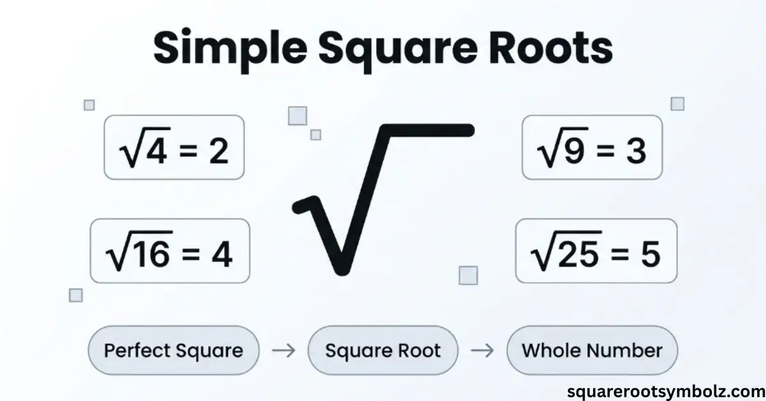
A square root is a number that produces the original number when multiplied by itself. For example, 3² = 9, so 3 is a square root of 9. The radical symbol √ represents the principal, nonnegative square root. LibreTexts explains this distinction and emphasizes that positive real numbers have positive and negative square roots.
For 2√3, the radical applies only to 3. The expression means 2 × √3, not √(2 × 3). This distinction matters. If you square 2√3, you get 4 × 3 = 12. Therefore, (2√3)² = 12, confirming the connection between 2√3 and √12.
Addition or Subtraction?
Radicals cannot always be added or subtracted simply by combining the numbers underneath the radical. You can combine like radical terms when their radicands match. For example, 2√3 + 5√3 = 7√3. The radical √3 behaves like a common factor.
However, √3 + √5 cannot be simplified into √8. The radicands are different, so these are unlike radical terms. This is an important rule when working with 2√3. For example, 2√3 + √3 becomes 3√3, but 2√3 + √2 does not combine into one radical term.
| Expression | Simplified result |
| 2√3 + 5√3 | 7√3 |
| 8√3 − 3√3 | 5√3 |
| 2√3 + √2 | Cannot combine |
| √3 + √5 | Cannot combine |
Fractions
Fractions involving 2√3 can often be simplified by treating the coefficient and radical separately. For example, 6√3 ÷ 3 = 2√3. The numerical coefficients 6 and 3 are reduced first, while √3 remains unchanged. This is a useful pattern when simplifying radical expressions.
If a radical appears in a denominator, rationalization may sometimes be needed. For example, 2/√3 can be rewritten as 2√3/3 by multiplying the numerator and denominator by √3. The resulting denominator is rational, while the value of the expression remains unchanged.
Some Harder Examples
Once the basic idea is comfortable, 2√3 appears naturally in more advanced radical operations. For example, 2√12 + 9√3 can first be simplified because √12 = 2√3. Therefore, 2√12 becomes 4√3, and the expression becomes 4√3 + 9√3 = 13√3.
Multiplication works similarly. Consider 2√3 × √3. Because √3 × √3 = 3, the result is 6. Another useful example is (2√3)². Square the coefficient and the radical: 2² × (√3)² = 4 × 3 = 12. These checks make radical work much easier to verify.
Surds
A surd is a root that cannot be simplified into a rational number. Because √3 cannot be reduced to an integer or fraction, √3 is a surd. Consequently, 2√3 is also irrational. MathIsFun identifies √3 as a surd and contrasts it with √4 = 2.
The decimal expansion makes this clear:
2√3 ≈ 3.4641016151377544
The digits continue without terminating or repeating in a fixed pattern. For exact mathematical work, however, it is better to keep 2√3 rather than replace it with a rounded decimal unless the problem specifically asks for an approximation. Mathway likewise distinguishes the exact and decimal forms.
| Property | 2√3 |
| Exact form | 2√3 |
| Approximate form | 3.464101615… |
| Rational? | No |
| Irrational? | Yes |
| Real? | Yes |
| Integer? | No |
| Simplified radical? | Yes |
| Surd? | Yes |
Pythagorean Theorem
The expression 2√3 can also appear naturally in geometry. The Pythagorean theorem connects the lengths of the sides of a right triangle through a² + b² = c². Radical values such as √3 frequently arise when solving for an unknown side. LibreTexts includes the Pythagorean theorem alongside its treatment of square and cube roots.
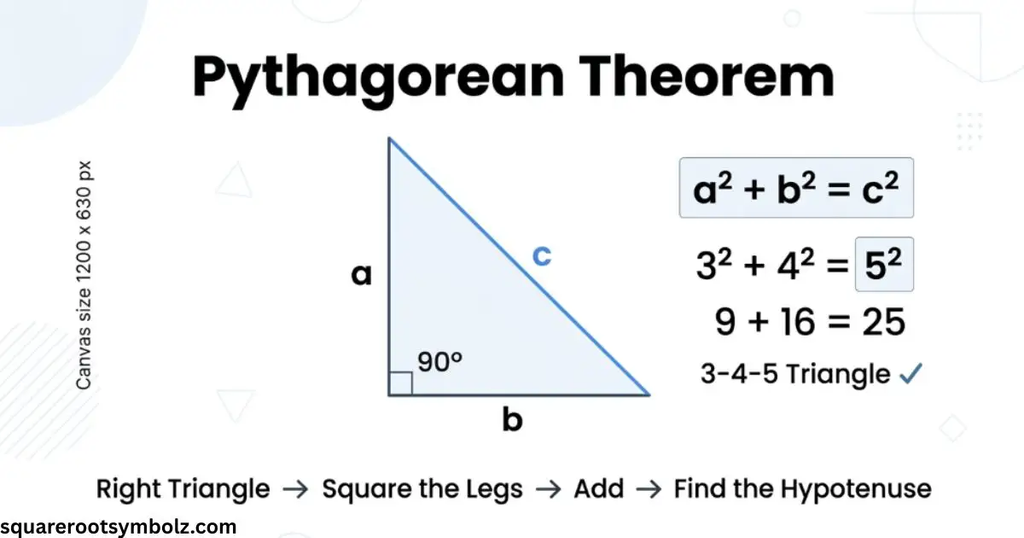
A familiar example comes from special right triangles. In a 30-60-90 triangle, side lengths occur in the ratio 1 : √3 : 2. If the shorter leg is 2 units, the longer leg is 2√3 units, approximately 3.464 units. This gives 2√3 a clear geometric meaning rather than making it just an abstract radical expression.
Is 2√3 the same as √12?
Yes. Since 12 = 4 × 3, √12 = √4 × √3 = 2√3. Both expressions represent exactly the same number.
Is 2√3 irrational?
Yes. √3 is irrational, and multiplying an irrational number by the nonzero rational number 2 produces an irrational result. Therefore, 2√3 is irrational.
What is 2√3 in decimal form?
2√3 is approximately 3.464101615. If rounding to two decimal places, it is 3.46. Mathway currently lists approximately 3.46410161… for the expression.
What is (2√3)²?
(2√3)² = 12.
Square the coefficient and the radical:
2² × (√3)² = 4 × 3 = 12.
What is 2√3 × √3?
The result is 6.
2√3 × √3 = 2 × 3 = 6.
Can 2√3 be simplified further?
No. The radicand 3 has no perfect-square factor greater than 1. Therefore, 2√3 is already in simplest radical form.
Is 2√3 a rational number?
No. It is an irrational real number because √3 is irrational.
What does 2√3 mean?
It means 2 multiplied by the square root of 3. The coefficient 2 is outside the radical, while 3 is the radicand.
Is 2√3 equal to √6?
No. Squaring the two expressions shows the difference:
(2√3)² = 12
while
(√6)² = 6.
Therefore, they are different numbers.
What is 2√3 divided by 2?
The answer is √3:
2√3 ÷ 2 = √3.
What is −2√3?
It is the negative of 2√3:
−2√3 ≈ −3.464101615.
This is different from 2√3 because the negative sign changes the value.
Conclusion
2 square root 3 means 2√3, and its exact value is 2√3 while its decimal approximation is about 3.464101615. The expression is already in simplest radical form because 3 has no perfect-square factor.
The most useful connection is √12 = 2√3. It shows how factoring out a perfect square simplifies a radical. Remember that 2√3 is irrational, can appear in geometry and trigonometry, and should normally remain in exact radical form when an exact answer is required.
FAQ Section
What is 2 square root 3?
2 square root 3 is 2√3, meaning 2 multiplied by the square root of 3.
What is 2√3 equal to?
In exact form it is 2√3. In decimal form, it is approximately 3.464101615.
Is 2√3 the same as √12?
Yes. √12 = 2√3 because 12 can be factored as 4 × 3.
Is 2√3 irrational?
Yes. Since √3 is irrational, 2√3 is also irrational.
Can 2√3 be simplified?
No. The expression is already in simplest radical form.
What is 2√3 squared?
(2√3)² = 12.
What is 2√3 times √3?
2√3 × √3 = 6.
What is 2√3 divided by 2?
√3.
What is 2√3 rounded to two decimal places?
3.46.
Where does 2√3 appear in geometry?
It occurs naturally in 30-60-90 triangles, where the longer leg is √3 times the shorter leg. It can also appear when applying the Pythagorean theorem.

I’m the creator of SquareRootSymbolz.com, where I publish easy-to-understand guides on symbols, Unicode characters, Alt codes, keyboard shortcuts, and copy-and-paste text symbols. My goal is to provide accurate, well-researched, and user-friendly content that helps readers quickly find the information they need.